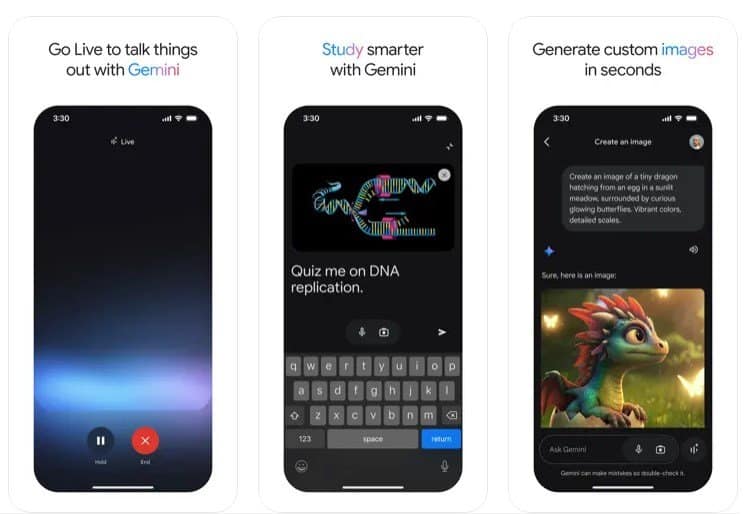
Since the launch of Apple Intelligence more than a year ago, progress has felt cautious rather than transformative. Aside from modest additions such as Apple Music’s AutoMix feature and the Apple Watch’s Workout Buddy, Apple has introduced relatively few headline-grabbing AI capabilities into its core apps. That restrained pace, however, may be about to change. According to Bloomberg’s Mark Gurman in today’s Power On newsletter, Apple is preparing a significant shift in its AI strategy, centred on a new, Gemini-backed version of Siri that will be woven deeply into the company’s software ecosystem.
Apple Intelligence so far: promise without momentum
When Apple Intelligence was unveiled, expectations were high that it would mark a turning point for AI across iOS, macOS and watchOS. Instead, the rollout has been incremental. Features like AutoMix demonstrate clever, context-aware automation, while Workout Buddy offers personalised encouragement during exercise sessions, but neither fundamentally changes how users interact with their devices.
This cautious approach has stood in stark contrast to rivals. Google and Microsoft have aggressively pushed generative AI into search, productivity tools and operating systems, while startups like OpenAI and Perplexity have reshaped expectations around conversational interfaces and instant knowledge retrieval. Against that backdrop, Apple’s limited AI updates have fuelled criticism that the company is falling behind, or at least deliberately waiting for the right moment to make a larger move.
That moment may now be approaching, driven by a strategic pivot away from Apple building everything itself and towards deeper collaboration with Google’s Gemini platform.
Moving away from World Knowledge Answers
For several years, Apple had been developing an ambitious internal project known as World Knowledge Answers. The aim was to create a system capable of competing directly with services such as ChatGPT and Perplexity by providing conversational, source-aware answers to complex questions. In effect, Apple wanted its own large-scale AI brain, tightly integrated with Siri and capable of handling broad, open-ended queries.
According to Gurman, that ambition has been scaled back. Rather than continuing to invest heavily in building a direct competitor from scratch, Apple is now focusing on replacing or augmenting existing technologies with Gemini, Google’s rapidly evolving AI model. This marks a notable philosophical shift for a company historically known for vertical integration and control over its core technologies.
The retreat from World Knowledge Answers suggests Apple has recognised both the cost and complexity of competing head-on with companies whose entire focus is AI research. By leveraging Gemini, Apple can potentially accelerate feature development while concentrating on what it does best: integrating technology seamlessly into consumer-facing products.
Paused projects and a rethink of AI strategy
World Knowledge Answers is not the only casualty of this strategic reset. Gurman reports that Apple has also paused work on a major overhaul of Safari that was intended to reimagine the browser for the AI era. The planned features were ambitious, including tools to assess the trustworthiness of documents, cross-reference information across multiple sources, and counter emerging AI-powered browsers from companies like Perplexity and OpenAI.
For now, that Safari project is on hold, although there is reportedly a chance it could be revived ahead of WWDC 2026. Similarly, Apple has returned to the drawing board on AI-driven health features, an area where expectations are particularly high given Apple’s strong position in wearables and health data.
These pauses underline a broader reassessment within Apple following the departure of John Giannandrea, the company’s former senior vice president of machine learning and AI strategy. Under his leadership, Apple pursued multiple parallel AI initiatives, including the idea of embedding standalone chatbot-style experiences across apps such as Safari, TV, Health, Music and Podcasts. While innovative, this approach risked fragmenting the user experience.
Gemini-backed Siri at the centre of everything
The new direction appears far more cohesive. Instead of scattering chatbot-style interfaces throughout the system, Apple plans to integrate a Gemini-powered Siri deeply across its core apps. This suggests a future where Siri is no longer a separate, sometimes frustrating voice assistant, but a persistent layer of intelligence that understands context, intent and content within each app.
Although details remain scarce, the implications are significant. In Safari, a Gemini-backed Siri could summarise articles, explain complex topics, or answer follow-up questions without the user leaving the page. In Music or Podcasts, it could offer richer recommendations, generate playlists based on nuanced moods, or provide contextual information about artists and episodes. In Health, it might interpret trends in user data and offer clearer, more conversational insights, albeit with Apple’s characteristic emphasis on privacy.
Crucially, this approach aligns with Apple’s long-standing preference for reducing visible complexity. Rather than asking users to open a chatbot or learn a new interface, intelligence would surface naturally within familiar apps, triggered by voice, text or subtle prompts.
What to expect next and why it matters
Gurman reports that the new Siri could be announced as soon as next month, suggesting Apple is keen to signal momentum after a relatively quiet period on the AI front. If so, this announcement may offer an early glimpse of how deeply Gemini will be embedded into Apple’s platforms and how much control Apple retains over the user experience.
Apple has previously demonstrated how Siri could interact with apps through App Intents, allowing the assistant to perform complex, multi-step tasks within third-party software. A Gemini-enhanced Siri could take this much further, handling more natural language requests and reasoning across information sources while still operating within Apple’s tightly controlled ecosystem.
The stakes are high. Done well, this strategy could allow Apple to leapfrog incremental AI features and deliver something genuinely differentiated: an assistant that feels less like a novelty and more like an integral part of daily digital life. Done poorly, it risks reinforcing perceptions that Apple is overly reliant on partners and slow to innovate independently.
Either way, the shift signals a clear acknowledgement that the AI landscape has changed. Rather than chasing every trend, Apple appears to be betting on a single, deeply integrated intelligence layer, powered by Gemini but shaped by Apple’s design philosophy. For users, this could mark the beginning of a more coherent and genuinely useful era of Apple Intelligence, finally delivering on the promise made more than a year ago.

I love tech and gaming, and am always looking for the ‘next big thing’…