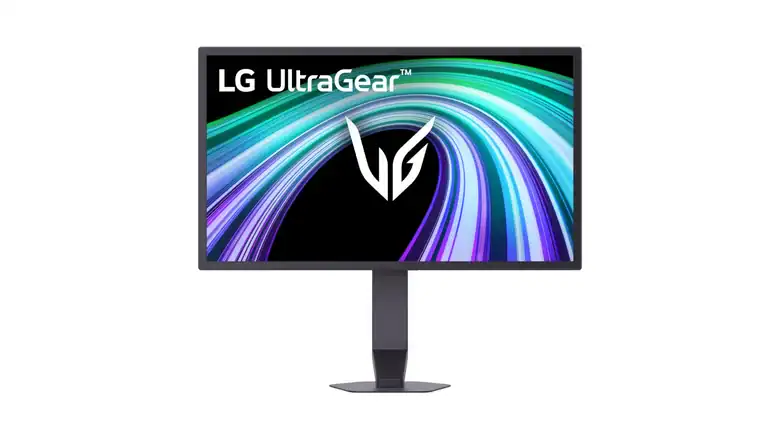
LG has officially revealed what it claims is the world’s first Full HD gaming monitor capable of running at a native 1,000Hz refresh rate. The new addition to the UltraGear lineup is designed specifically for competitive gamers and esports players who demand the fastest possible response times and ultra-smooth gameplay.
While most gaming monitors currently top out at 240Hz or 360Hz, LG’s latest display pushes refresh rates into entirely new territory. For hardcore first-person shooter players, where every millisecond counts, the UltraGear could become one of the most sought-after gaming monitors on the market.
What does 1,000Hz actually mean?
A monitor’s refresh rate refers to how many times the display updates every second. A 60Hz monitor refreshes 60 times per second, while a 240Hz gaming monitor refreshes 240 times.
LG’s new UltraGear refreshes an incredible 1,000 times every second at its native Full HD resolution of 1,920 x 1,080.
In simple terms, higher refresh rates can make movement appear smoother and more responsive. Fast-moving objects become clearer, motion blur is reduced, and the delay between mouse movements or keyboard inputs and on-screen actions becomes shorter.
For competitive gaming, especially in fast-paced shooters such as Counter-Strike, Valorant or Call of Duty, those tiny improvements can potentially provide a real advantage.
Native 1,000Hz at Full HD is the key difference
The major talking point surrounding LG’s announcement is that this monitor achieves 1,000Hz natively at Full HD resolution.
That might sound obvious, but rival manufacturers have taken a different approach. Samsung and Acer recently launched monitors advertised as capable of reaching 1,000Hz, but only when dropping the resolution down to 720p.
In some cases, users must reduce both image quality and resolution significantly in order to unlock the highest refresh rates. Acer’s latest high-speed display, for example, reportedly falls to 500Hz when operating at 1440p resolution.
LG claims its UltraGear avoids that compromise entirely by delivering a full 1,000Hz experience at native 1080p resolution.
That distinction could make the monitor especially attractive to esports professionals, many of whom already prefer lower resolutions in exchange for maximum frame rates and responsiveness.
Designed for competitive gaming
The UltraGear features a 24.5-inch IPS display, a size commonly favoured within the esports scene. Smaller monitors allow players to keep all the action within their field of vision without excessive head movement, something particularly important during fast competitive matches.
LG has also included a low-reflection coating to minimise glare and improve visibility in brightly lit gaming setups or tournament environments.
The stand itself has been designed with practicality in mind. It uses a compact base to save desk space and includes adjustable height and tilt controls so users can position the monitor comfortably.
There is even a built-in headset hook, helping gamers keep their setup tidy without adding extra accessories to their desk.
AI features are making their way into gaming monitors
Like many modern devices, LG’s new monitor also incorporates AI-powered features.
The company says the UltraGear includes AI Scene Optimization, which automatically adjusts picture settings depending on the type of game or content being displayed. The idea is to optimise contrast, brightness and colours without requiring manual tweaking.
There is also AI Sound functionality designed to deliver more immersive spatial audio experiences when paired with compatible audio equipment.
While AI features have become common in smartphones and TVs, gaming monitors are increasingly beginning to adopt similar technologies as manufacturers look for additional ways to stand out in a highly competitive market.
Is 1,000Hz really necessary?
For many gamers, the idea of a 1,000Hz monitor may sound excessive.
Even today, plenty of players still use 144Hz or 240Hz displays quite happily, and those refresh rates already offer a dramatic improvement over standard 60Hz screens.
The challenge with 1,000Hz is that very few people have actually experienced it, meaning it’s difficult to know just how noticeable the difference will be in real-world use.
There is also the issue of hardware requirements. To fully benefit from a 1,000Hz display, a gaming PC would need to generate extremely high frame rates consistently, something that even top-end graphics cards may struggle with in demanding modern games.
That means the UltraGear is unlikely to appeal to casual gamers or general users. Instead, it’s aimed squarely at esports professionals and highly competitive players who prioritise responsiveness above all else.
The race for faster gaming displays continues
The launch of LG’s UltraGear highlights how aggressively manufacturers are continuing to push gaming display technology forward.
Over the past decade, gaming monitors have evolved rapidly, moving from 60Hz to 144Hz, then to 240Hz, 360Hz and now 1,000Hz. At the same time, technologies such as OLED panels, HDR support and adaptive sync have become increasingly common.
However, refresh rates remain one of the biggest selling points in competitive gaming, and companies are clearly determined to keep pushing the limits.
Pricing and release date still unknown
At the time of writing, LG has not confirmed pricing or availability for the new UltraGear monitor.
Given its cutting-edge specifications, it’s unlikely to come cheap, particularly as ultra-high refresh rate monitors typically command premium prices. However, pricing will play a major role in determining whether the display becomes a niche esports product or something with broader appeal.
Even so, the announcement itself is significant. Whether or not 1,000Hz becomes the next major trend in gaming displays, LG has firmly positioned itself at the forefront of the race for ultra-fast monitor technology.
For competitive gamers chasing every possible advantage, the future of esports displays may have just arrived.
Via: LG Newsroom

One of the Editors for Tech on the Go, I love covering mobile tech and social media. I also manage the reviews we cover so all the writers stay on my good side!