

Buying cheap earbuds used to mean settling for tinny sound, weak battery life, and dropouts the moment you walked past a kitchen microwave. That is not the case anymore. Today’s budget wireless earbuds comparison is a lot more interesting, because brands are packing in solid battery life, decent ANC, and surprisingly polished companion apps without pushing the price into premium territory.
The tricky part is that “budget” can mean very different things. For some people, it is anything under £50. For others, it is the sweet spot around £80 to £100 where you still want real value, but you expect better call quality, stronger bass, and a more comfortable fit. In this guide, we will break down what matters most, where brands cut corners, and how to choose earbuds that actually fit your day-to-day life.
What Matters Most In A Budget Wireless Earbuds Comparison
When you compare affordable earbuds, it is easy to get distracted by flashy marketing. A long spec sheet does not always translate into a better listening experience. In fact, the best value models usually focus on a few key strengths and do them well.
Sound quality first
Sound is still the main reason people buy earbuds, so start there. At this price range, look for balanced tuning, clear vocals, and enough low-end punch to keep music lively without turning everything muddy. If you listen to podcasts, audiobooks, or calls all day, clarity matters more than overwhelming bass.
Battery life and charging
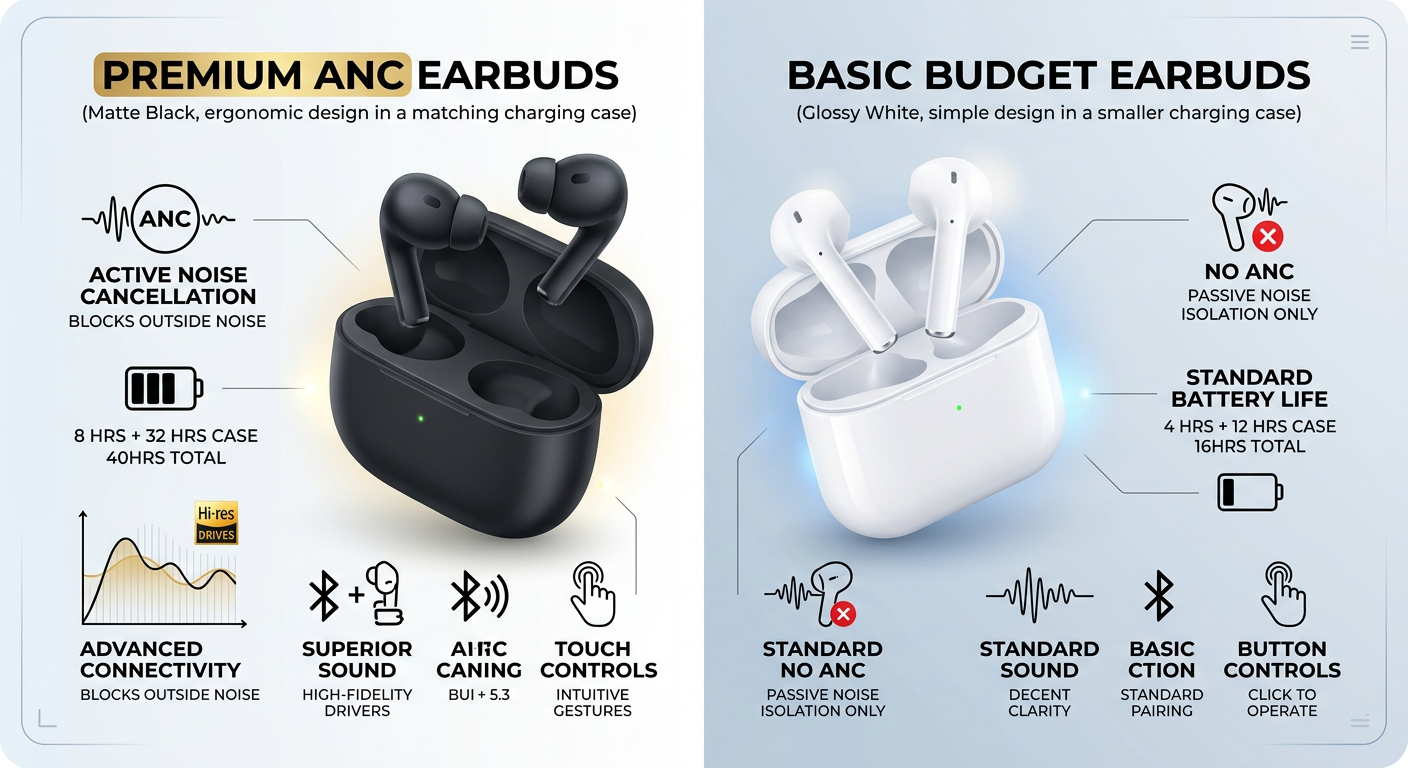
Budget models often advertise big total battery numbers, but the real question is what you get per charge. A practical target is 6 to 10 hours from the earbuds alone, plus a case that gets you through a couple of extra days. Fast charging is a bonus when you forget to top up before leaving the house.
Comfort and fit
You can forgive average audio if the earbuds disappear in your ears. You cannot forgive pain after 45 minutes. Lightweight shells, multiple ear tip sizes, and a stable fit matter more than many buyers expect, especially if you commute or work out regularly.
Best Value Features To Look For
Not every feature deserves your money. The smartest buyers focus on the extras that improve daily use, not just the ones that look good on a product page.
Active noise cancellation
ANC is one of the most tempting features in affordable earbuds, but quality varies a lot. Good budget ANC can soften bus noise, office chatter, and fan hum. Weak ANC often sounds impressive on paper and does very little in the real world, so reviews matter here more than specs.
Call quality
If you take calls often, microphones are a bigger deal than many people realize. Wind reduction, background noise handling, and voice clarity can make a cheap pair feel much more polished. This is especially important if you use earbuds for work meetings or voice notes on the go.
App support and controls
A companion app can improve an otherwise average pair, especially when it includes EQ presets, touch control customization, and firmware updates. If a model has no app at all, it is not automatically bad, but you should make sure the default tuning and controls already work for you.
How Budget Models Usually Compare
Here is the thing, most budget earbuds fall into three broad camps.
Sound-focused models
These usually give you the best audio for the money. They may skip stronger ANC or fancy features, but if you care about music and podcasts above everything else, they can be the smartest buy.
Feature-packed models
These aim to pack in ANC, app controls, multipoint pairing, and longer battery life. They are often the most tempting on paper, but the audio can be less refined than sound-first rivals. If convenience matters more than pure sound quality, this category is worth a look.
Comfort-first models
Some earbuds are built around a smaller, lighter design and are ideal for all-day wear. They may not have the strongest bass or the most advanced extras, but they can be the best choice if you hate bulky earbuds or have smaller ears.
Real-World Buying Advice
A good budget wireless earbuds comparison is not about finding one universal winner. It is about matching the earbuds to how you actually use them.
If you mostly listen at home, skip the biggest feature claims and focus on sound quality. If you commute, prioritize ANC and comfort. If you live on calls and video meetings, microphone performance should be near the top of your list. And if you switch between phone, laptop, and tablet, multipoint pairing can be a genuine quality-of-life upgrade.
If you want more gadget buying advice and practical tech roundups, keep an eye on Tech On The Go. It is the kind of place where readers go when they want clear, useful guidance instead of hype.
Conclusion
The best affordable earbuds are better than ever, but the value only shows up when you compare them properly. Don’t chase the longest spec list or the loudest marketing. Focus on sound, comfort, battery life, and the one or two features you will use every day.
If you approach a budget wireless earbuds comparison with that mindset, you will almost always end up with a pair that feels like a smart purchase, not a compromise.

Scouring the internet for mobile tech, news & tips!